Analysis of China’s EV Charger Market – September 2025
According to data from the China Electric Vehicle Charging Infrastructure Promotion Alliance (EVCIPA) , the total number of public EV Chargers for charging infrastructure reached 4.476 million in September 2025. The number of public Chargers increased by 160,000 month-on-month and 95,000 year-on-year (compared with September 2024).
Currently, there are 13.59 million private EV Chargers (installed with vehicles), an increase of 555,000 month-on-month in September. The average monthly charging capacity per public Charger in September was 1,716 kWh, showing a solid growth compared with 1,514 kWh in September 2024.
In recent years, China’s charging infrastructure has developed rapidly, establishing the world’s largest, most widely covered, and most diverse charging infrastructure system. Assuming the charging utilization rate of public Chargers is three times that of private Chargers (a 3:1 ratio), the ratio of charging facilities to battery electric vehicle (BEV) sales from January to September 2025 reached 0.77, essentially a 1:1 relationship.
Due to the explosive growth in public Charger installations, the overall vehicle-to-Charger ratio has achieved a relatively comfortable level of 0.77:1 (i.e., more Chargers than vehicles), leading to differentiation in EV Charger operations and extremely low utilization rates of old and outdated Chargers.
Currently, the charging infrastructure still faces urgent issues that need improvement, including inadequate layout, unreasonable structure, backward technology of old Chargers, unbalanced services, and non-standard operations.
It is believed that with the continuous expansion of the new energy vehicle (NEV) market, adjusting the charging infrastructure will be relatively manageable, and the NEV sector holds significant growth potential.
Given the slow development and insufficient demand for battery swapping stations, the focus on promoting private slow charging is entirely correct. Wider popularization of private Chargers is necessary to achieve sustainable development.
Looking ahead to the rapid growth trend of NEVs, especially electric vehicles (EVs), it is imperative to further build a high-quality charging infrastructure system: upgrading old low-power AC Chargers and increasing the deployment of high-power DC fast-EV Chargers.
This will better meet people’s needs for purchasing and using NEVs, and support the green and low-carbon transformation of transportation as well as the construction of a modern infrastructure system.
1. Overall Status of EV Chargers
Charging infrastructure provides charging and swapping services for EVs, serving as a key integrated transportation-energy infrastructure.
As of the end of September 2025, the total number of electric vehicle charging infrastructure units (ports) in China reached 18.063 million, a year-on-year increase of 54.5%. Among these:
- Public charging facilities (ports): 4.476 million, a year-on-year increase of 40.0%, with a total rated power of 199 million kilowatts and an average power of approximately 44.36 kilowatts per unit.
- Private charging facilities (ports): 13.587 million, a year-on-year increase of 60.0%, with a registered installed electricity capacity of 120 million kilovolt-amperes.
Historical Growth Data:
- 2021: Public Chargers increased by 340,000 (a 18% year-on-year decrease vs. 2020); private Chargers increased by 600,000 (a 32% year-on-year decrease vs. 2020).
- 2022: Public Chargers increased by 650,000 (a 92% year-on-year growth vs. 2021); private Chargers increased by 1.94 million (a 226% year-on-year growth vs. 2021).
- 2023: Public Chargers increased by 930,000 (a 43% year-on-year growth vs. 2022); private Chargers increased by 2.458 million (a 27% year-on-year growth vs. 2022).
- 2024: Public Chargers increased by 850,000 (an 8% year-on-year decrease vs. 2023); private Chargers increased by 3.37 million (a 37% year-on-year growth vs. 2023).
- September 2025: Public Chargers totaled 4.476 million (up 160,000 month-on-month and 95,000 year-on-year); private Chargers reached 13.59 million (up 555,000 month-on-month); average monthly charging per public Charger was 1,716 kWh (up from 1,514 kWh in September 2024).
2. Monthly Growth Status of EV Chargers
- As of September 2025, public EV Chargers increased by 975,000 compared with the end of 2024, showing rapid growth.
- Private EV Chargers increased by 4.35 million compared with the end of 2024, maintaining strong growth momentum.
- Battery swapping stations increased by 551 compared with the end of 2024, with slow growth in recent months.
Private charging dominates the market. Surveys show that EV owners typically charge via:
- Owned private Chargers, shared private Chargers, or public Chargers in residential areas/companies (each accounting for 22%-26%, totaling approximately 75%).
- The remaining users charge at public Chargers on roads outside residential areas, while some use public Chargers attached to shopping malls, cinemas, etc.
3. Characteristics of Public EV Chargers by Region
Currently, populous and economically developed provinces such as Guangdong, Zhejiang, Jiangsu, and Shandong are the main markets for charging facilities. Shanghai maintains a large scale, while Beijing has dropped out of the top 10, marking a significant decline in its status.
4. Analysis of Charging Enterprise Characteristics
China’s EV Charger operators can be roughly categorized into four types:
- Integrated enterprises (manufacturing + investment + operation): Adopt a heavy-asset model, focusing on operating their own assets while cooperating with other operators and third-party platforms. Key players include:
- Star Charge (affiliated with Wanbang Digital)
- TELD (Tgood)
- Woma Charging (Woma Co., Ltd.)
- Potevio New Energy
- EV Power (Shanghai)
- Che Dian Wang (Shenzhen, with Kelu Electronics as a shareholder)
- Grid-owned charging networks:
- State Grid Electric Vehicle Service Co., Ltd. (under State Grid Corporation of China)
- China Southern Power Grid Electric Vehicle Service Co., Ltd. (under China Southern Power Grid)
- Automaker-owned charging networks:
- Includes Tesla, NIO, XPeng, SAIC Anyue, GAC Energy, etc.
- Some automakers outsource charging network construction and operation to asset-heavy operators or third-party service providers.
- Third-party charging network operators:
- Adopt a light-asset model, focusing on the long-tail market of EV Chargers and providing SaaS services to regional operators (essentially IT service providers). Key players include:
- Cloud Express Charging
- Xiaoju Charging (affiliated with Didi Chuxing)
- Shenzhen Huineng
Industry Barriers and Market Trends
The domestic EV Charger operation industry faces four core competitive barriers: capital, venue resources, power grid capacity, and data resources.
The industry has shown a Matthew effect, with increasing market concentration among leading enterprises. DC EV Chargers have achieved large-scale development, and leading operators demonstrate strong performance:
- GAC Energy: Average monthly charging per Charger reached 9,850 kWh in September, maintaining consistent performance.
- NIO: Approximately 2,277 kWh per Charger monthly.
- Tesla: 2,803 kWh per Charger monthly, with stable performance.
- In contrast, some old and outdated Chargers only achieve ~100 kWh monthly. The gap between leading enterprises (thousands of kWh) and outdated Chargers (hundreds of kWh) ranges from several times to dozens of times.
Technical Classification
EV Chargers are divided into two types:
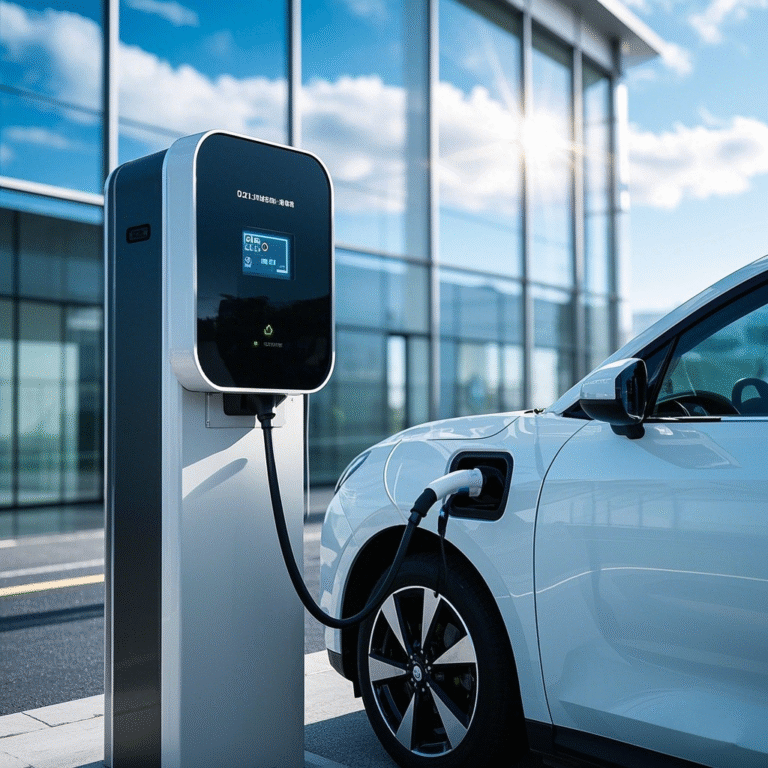
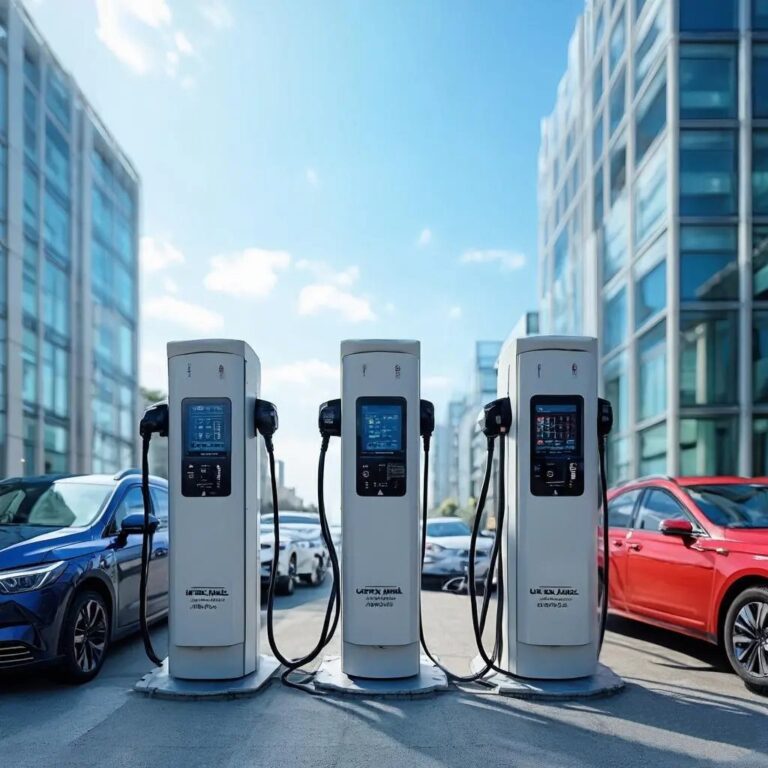
- DC EV Chargers (fast charging): Larger in size, featuring high voltage, high power, and fast charging speeds. They have higher requirements for the power grid and are typically installed at highway service areas, bus terminals, etc. Accounting for ~20% of the market.
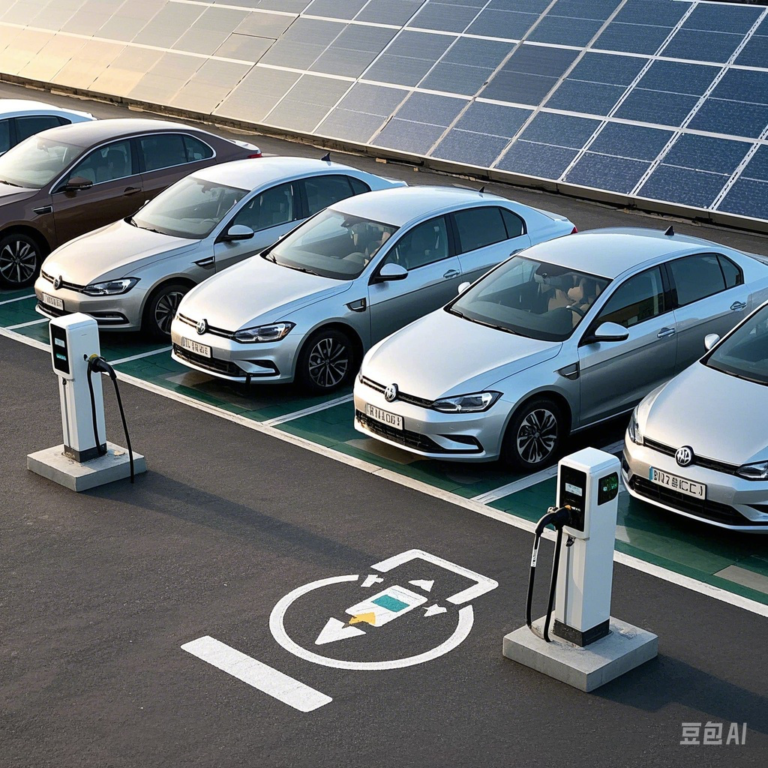
- AC EV Chargers (slow charging): Lower unit price and easier to install, mostly privately owned. They account for over 80% of the market due to their large quantity and wide distribution.
Technological Trend
DC EV Chargers are evolving toward higher power outputs.
International Comparison
- Public dedicated EV Chargers (e.g., for public transportation) achieve the highest utilization rates, with effective orderly charging for fixed-demand scenarios.
- Globally, the number and density of public DC EV Chargers are on the rise.
- China leads in DC EV Charger promotion: In 2024, DC Chargers accounted for over 42% of public charging networks in China.
- The Middle East has emerged as a “rising star” in DC charging:
- DC Charger share increased by 7% in 2022, exceeding 21%.
- DC charging density rose by 125% to 1.3 DC Chargers per 100 kilometers of road.
- Both indicators are expected to grow rapidly in the future.
5. Analysis of Demand-Satisfaction Capacity of EV Chargers
- In September 2025, domestic retail sales of battery electric passenger vehicles reached 826,000 units. Meanwhile, 160,000 new public Chargers and 555,000 new private Chargers were added.
- If public and private Chargers are assumed to serve an equal number of users (1:1 ratio), the vehicle-to-Charger ratio from January to September 2025 was 1:0.8, indicating sufficient charging facilities overall.
- This calculation excludes plug-in hybrid electric vehicles (PHEVs), which have lower charging demands (e.g., the “Shanghai model” where some PHEVs are used primarily with gasoline without charging).
Adjusted Vehicle-to-Charger Ratio (Considering Utilization)
With public Chargers having a 3:1 utilization advantage over private Chargers, the ratio of BEV sales to charging facilities (adjusted for utilization) reached 0.77 from January to September 2025. This means one EV Charger serves 0.77 vehicles, essentially a balanced 1:1 relationship. The surge in public Charger installations has resulted in a relatively comfortable vehicle-to-Charger ratio.
Policy Orientation
China’s NEV development plan clearly identifies private slow charging as the main development trend, targeting a share of over 90%. Currently, the slow growth of private Chargers is a key bottleneck restricting EV popularization.
User Satisfaction
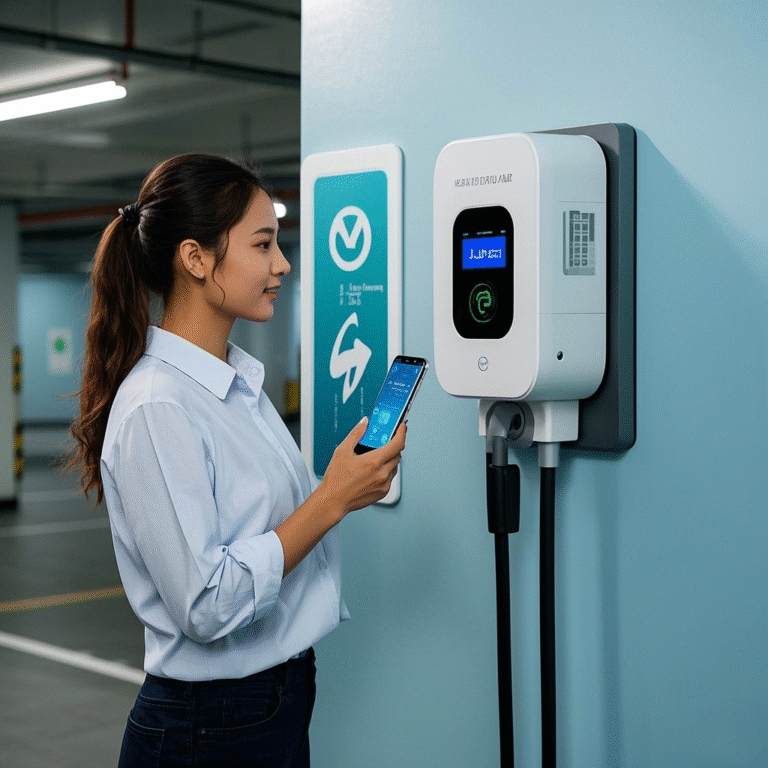
Surveys indicate that owners with private EV Chargers have higher satisfaction across all dimensions (including Charger availability, layout rationality, charging prices, and settlement accuracy) compared to other users.
Private Chargers, owned exclusively by users and usually installed with the vehicle, meet at-home charging needs. With a large user base, they remain the absolute backbone of the charging infrastructure system.