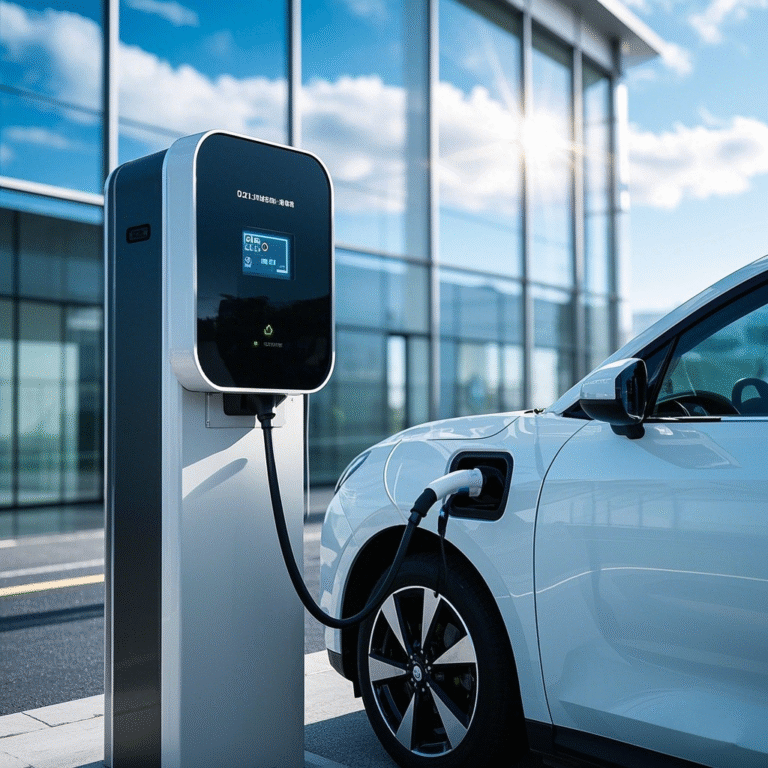
Analysis of charging infrastructure data in May 2025: Market changes behind- 4.08 million public EV chargers and 10 million private EV chargers in China
Overview: As of May 2025, the total number of EV chargers in China will exceed 14.4 million, and the car-to-EV charger ratio will approach 1:1 for the first time. DC supercharging technology makes it possible to “charge for 10 minutes and travel 400 kilometers”, and the integrated photovoltaic storage and charging solution will reduce costs by 40%. New energy replenishment is changing from a “source of anxiety” to a “value point”.
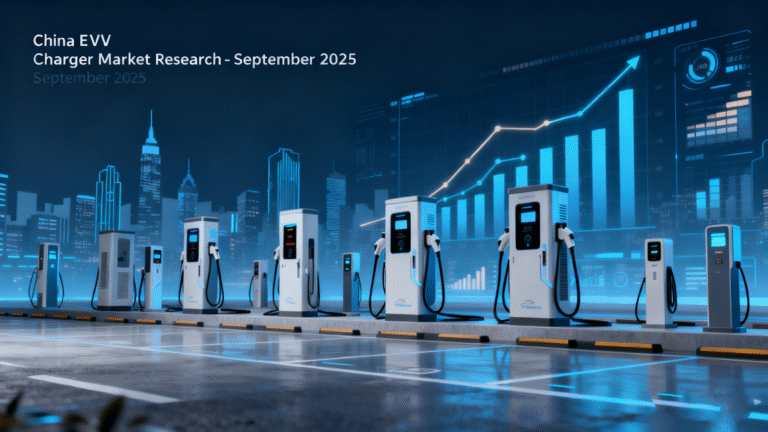
As of May 2025, China’s charging infrastructure construction has reached a milestone: the total number of public EV chargers has exceeded 4.08 million, the number of private EV chargers has exceeded 10.32 million, and the car-to-EV charger ratio is approaching 1:1 for the first time. This set of data not only marks a breakthrough in the scale of the new energy vehicle charging system , but also reflects the deep changes in market structure, user habits and industrial logic.
1. Scale growth: Public and private charging facilities exploded
public EV chargers increased by 91,000 per month, a year-on-year growth rate of 25%, continuing the trend of accelerated construction since 2024. From an annual perspective, the number of public EV chargers increased from 3.12 million in May 2024 to 4.08 million in May 2025, with an annual growth rate of 30.8%, which is dynamically matched with the growth rate of new energy vehicle sales. Private EV chargers broke through the 10 million mark at an even more astonishing scale. Behind the monthly increase of 245,000 is the deep penetration of home charging scenarios – data shows that 78% of private EV chargers are installed in residential areas, and 15% are located in commercial office areas, reflecting users’ strong demand for ” recharging at home “.
Core data comparison:
Public EV chargers: 4.08 million (1.895 million DC/2.187 million AC), with an average monthly charging capacity of 1,580 kWh per EV charger, a 16.3% increase over the same period in 2024
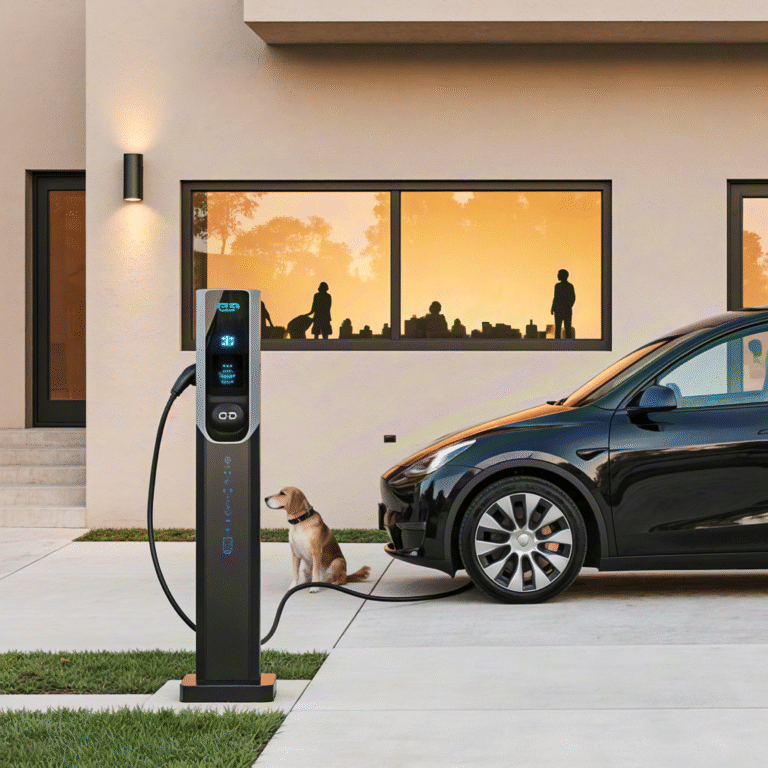
Private EV chargers: 10.32 million, with an average monthly charging capacity of 520 kWh per EV charger. The utilization rate of public EV chargers is about 3 times that of private EV chargers.
Car-to-EV charger ratio: Based on the 13 million new energy vehicles in use, the car-to-EV charger ratio is 1.27:1, and first-tier cities have achieved 1:1.
2. Structural differentiation: the rise of DC EV chargers and the Matthew effect of leading operators
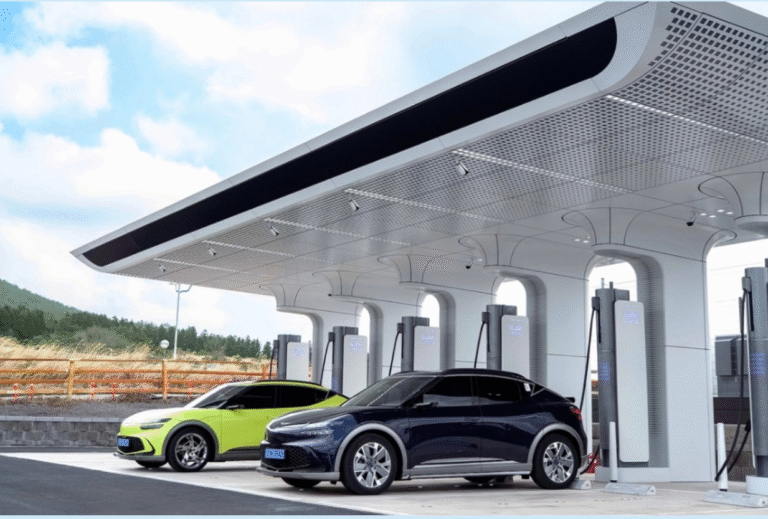
DC EV chargers accounted for 46.4% of the market share with a scale of 1.895 million, becoming the main growth force. The differentiated performance of the leading operators is particularly significant: the average monthly charging volume of GAC Energy EV chargers reached 6,804 degrees, which is 4.3 times the industry average . Its liquid-cooled supercharging technology has achieved remarkable results in the layout of the highway network in the Guangdong-Hong Kong-Macao Greater Bay Area; NIO superEV chargers ranked second with an average monthly charging volume of 2,354 degrees per EV charger, thanks to the coordination of the energy replenishment network of battery swapping + supercharging ; Tesla Supercharging Stations maintained their advantage in the high-end market with 2,893 degrees per EV charger.
In contrast, in the AC EV charger market, the average monthly charging capacity of old low- power equipment is only 100-200 degrees. The actual utilization rate of 3.5kW AC EV chargers built in some communities in the early stage is less than 5% due to low charging efficiency. This differentiation reveals that the industry is shifting from “scale expansion” to “quality upgrade” – for every 10% increase in the penetration rate of DC super EV chargers in public scenarios, the user’s charging waiting time can be shortened by 25 minutes, and the demand for the renovation of old AC EV chargers has reached 3 million, forming new industrial opportunities.
3. Regional Challenges: Pain Points and Solutions for Energy Replenishment in Low-Tier Cities
The current layout of charging facilities shows significant regional imbalance: the density of public EV chargers in first-tier cities such as Beijing, Shanghai, Guangzhou and Shenzhen is 2.8 units per thousand people, while in third- and fourth-tier cities it is only 0.9 units per thousand people, and in county markets it is less than 0.5 units per thousand people. This gap directly affects the car purchase decisions of users in low- tier cities – the survey shows that the proportion of consumers in third-tier cities who give up buying electric vehicles due to “inconvenience of charging” is 37%, which is 2.3 times that of first-tier cities .
The problem of outdated EV charger technology is particularly prominent in non-core cities: 42% of public EV chargers in the central and western regions still have a power of less than 50kW, and charging for one hour can only replenish 100 kilometers of driving range, which cannot meet the needs of long-distance travel. In addition, the service quality is generally uneven. The failure rate of EV chargers of some operators is as high as 15%, and the maintenance response time exceeds 24 hours, which seriously affects the user experience.
4. Industry Opportunities: From Single Charging to Value Reconstruction of Energy Ecosystem
Despite the challenges, the development potential of charging infrastructure is still huge. As the penetration rate of new energy vehicles exceeds 48%, charging facilities are being upgraded from “supporting services” to “energy portals”.
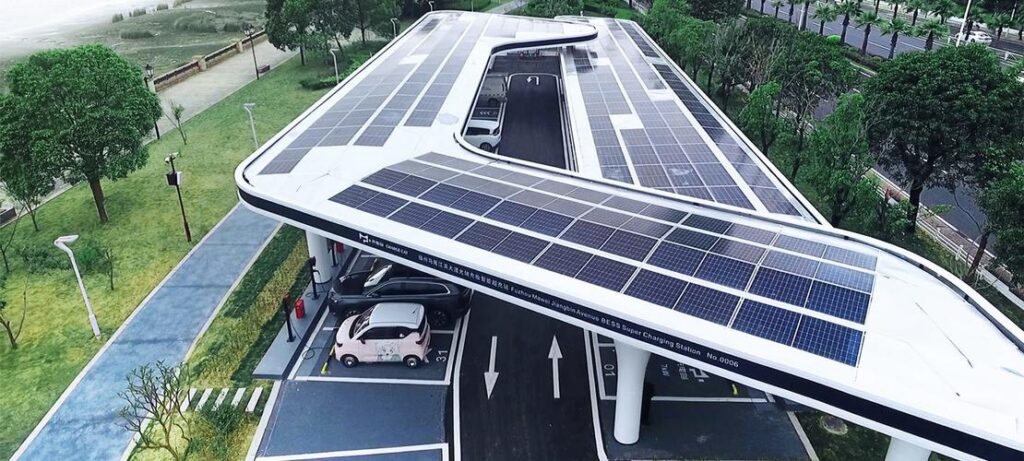
Photovoltaic storage and charging integration
The leading operators have begun to pilot the integrated solution of photovoltaic + energy storage + supercharging. A demonstration project has reduced the charging cost by 40% through valley power storage + photovoltaic power supply, and the green power consumption rate has reached 75%.
V2G Technology Application
Some pilot cities have realized reverse power supply from electric vehicles to the grid. A single vehicle can provide 15kWh of peak load capacity during peak hours, and users can receive a revenue share of 0.5 yuan/kWh.
Data value-added services
Through charging behavior data analysis, operators can accurately push services to car owners. A platform developed a “charging + travel” package based on 1 million user data, which drove a 22% increase in surrounding consumption.
Future Outlook: Three Major Change Trends in 2025-2026
1. Accelerated technology iteration
Liquid-cooled supercharging technology will become mainstream, and the proportion of EV chargers above 600kW is expected to increase from the current 8% to 30% in 2026. Together with 800V high-voltage platform models, the “10-minute charging for 400km of driving” energy replenishment experience will be achieved . The mass production of solid-state batteries will also force charging facilities to upgrade, and it is expected that the power of superEV chargers adapted to solid-state batteries will exceed 1000kW in 2026.
2. Innovation in operating model
The business model of “charging + membership + ecology” will replace the single service fee income. A leading operator has piloted a “charging membership system” where users pay 98 yuan/month to enjoy unlimited charging, which has led to a 45% increase in charging frequency. At the same time, it has achieved diversified income through value-added services such as in-vehicle advertising and insurance agency.
3. Balanced regional development
At the policy level, support for the central and western regions will be increased. It is expected that the “County Charging Infrastructure Improvement Plan” will be launched in the second half of 2025. The central government will provide a subsidy of 300 yuan/kilowatt for the construction of county EV chargers . The goal is to double the density of public EV chargers in counties to 1 unit per thousand people by the end of 2026. When charging facilities shift from “whether there is” to “how good it is”, the whole new energy vehicle industry is upgrading from “product competition” to “ecological competition”. The 4.08 million public EV chargers and tens of millions of private EV chargers are just a new starting point. The real change lies in how to transform charging from a “source of anxiety” to a “value point” through technological innovation, model optimization and ecological synergy. This is not only related to the experience upgrade of electric vehicle users, but also will reshape the underlying logic of energy consumption.