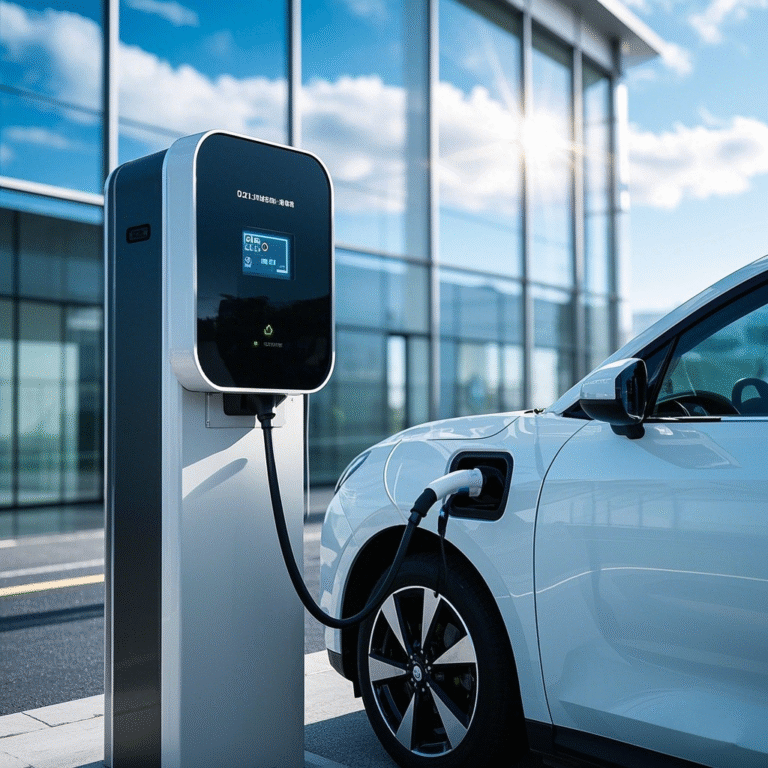
EV chargers will be accelerated in 2025. Can it keep up with the development of new energy vehicles?
Overview: By 2025, the number of new energy vehicles in China will exceed 80 million. The construction of EV chargers is advancing rapidly, but “lack of land for EV chargers” and “hard to find a EV charger” coexist. Insufficient fast charging leads to “charging for 1 hour and queuing for 2 hours”, and the renovation of old communities cannot restrict the popularization of private EV chargers. This race between “cars and EV chargers” tests the collaborative wisdom of policies, enterprises and society.
In 2025, the number of new energy vehicles in China is expected to exceed 80 million, with an average annual growth rate of more than 30%. At the same time, the construction of EV chargers has entered a “surge” stage: from first-tier cities to county towns, from highways to community parking lots, EV chargers have sprung up like mushrooms after rain . At the policy level, many places have included EV chargers in the core projects of “new infrastructure”, providing land, funds, and electricity subsidies; on the corporate side, car companies, energy companies, and third-party operators are accelerating their land grabbing to compete for the trillion-level charging market; in the capital market, EV charger-related companies are constantly raising funds and technology iteration is accelerating.
However, behind the apparent prosperity, there are still concerns about the rationality of the layout of EV chargers, operational efficiency, and user experience : “It is difficult to find a EV charger in the core area of the city” and “there is a waste of idle land in the EV charger” in remote areas. The low proportion of fast EV chargers leads to “charging for 1 hour and queuing for 2 hours”, and the renovation of old communities is difficult to restrict the popularization of private EV chargers… This “car and EV charger” race is testing the coordination ability of policies, enterprises and society.
1. Accelerating construction: the “triple push” of policies, enterprises and capital
EV charger construction is essentially the result of the combined effects of policy enforcement, corporate layout and capital pursuit. The policy shift from “subsidizing vehicles” to “subsidizing infrastructure” has provided a core driving force for the industry; the cross-border entry of car companies and energy companies has expanded the construction entities; and the influx of capital has accelerated technology upgrades and model innovation.
Policy “combination punch”: from “encouraging construction” to “mandatory construction”
In 2025, the EV charger policy will shift from “guidance” to “mandatory”: the Ministry of Housing and Urban-Rural Development requires that new residential communities be equipped with EV chargers at a ratio of 1:1.5 (i.e., 1.5 EV chargers per household), and that renovation of old communities must reserve conditions for the installation of charging facilities, otherwise they will not pass the acceptance inspection; the Ministry of Transport stipulates that the coverage rate of EV chargers in highway service areas must reach 100%, and the proportion of fast EV chargers must not be less than 60%, and service areas that do not meet the standards will be suspended from operating subsidies; local governments will also include EV chargers in the “urban renewal” assessment indicators. For example, a province’s requirement for county-level cities is “the density of public EV chargers must reach 1 per 2 square kilometers by the end of 2025, otherwise the special transportation funds will be deducted.” The “hard constraints” of the policy have forced all parties to speed up the pace of construction.
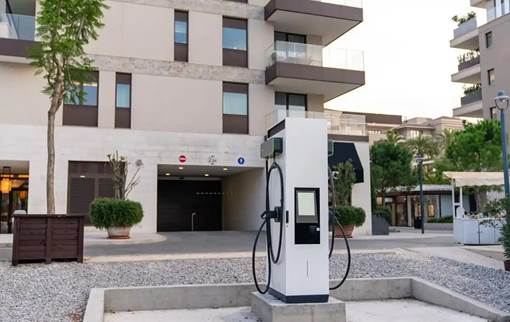
Enterprises “race to grab land”: car companies, energy companies, and third-party operators are the “three pillars”
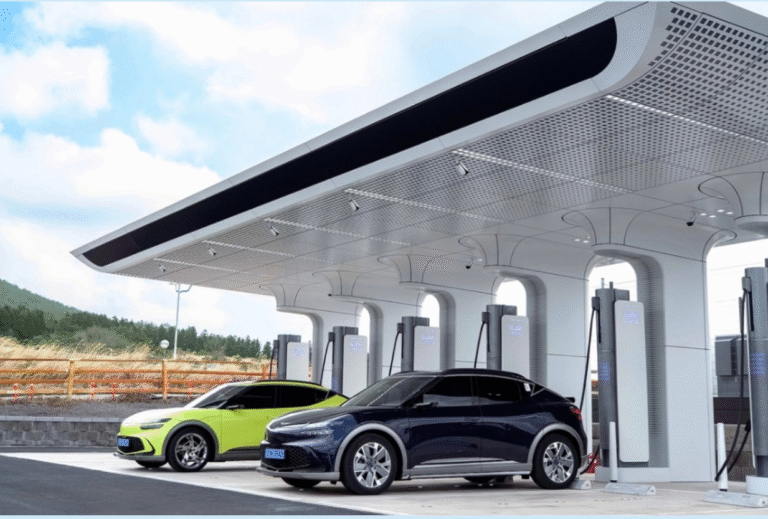
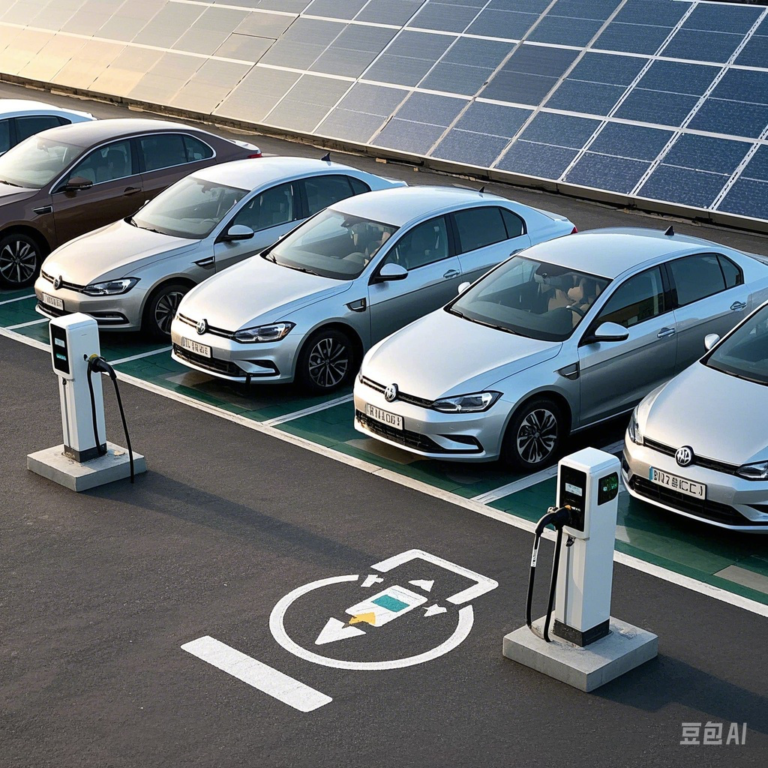
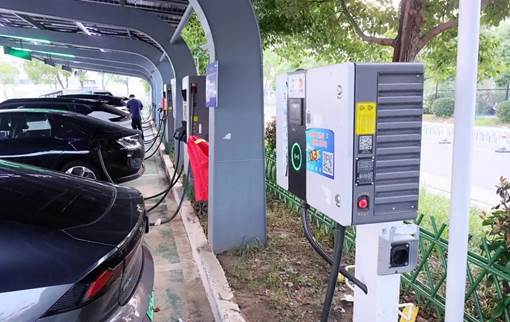
Automakers regard EV chargers as a key link in the “service closed loop”: an international automaker announced that it will build 10,000 supercharging stations (with a power of 480kW or more) in China by 2025, covering all prefecture-level cities. Users can directly reserve charging positions through the in-car navigation; energy companies rely on the advantages of the power grid to deploy “integrated photovoltaic, storage and charging” charging stations: a charging station built by a central enterprise in the west has photovoltaic panels installed on the top and energy storage batteries at the bottom. Photovoltaic power generation is used to charge vehicles during the day, and energy storage batteries are discharged at night to achieve “zero-carbon charging”; third-party operators are rapidly expanding through a “light asset model”: a certain company adopts the “cooperative construction of EV chargers + profit-sharing operation” approach, cooperating with shopping malls, office buildings, and community properties. The property provides the venue, and the company invests in the construction and operation of EV chargers. The two parties share the profits based on the charging volume. In the first half of 2025, more than 5,000 new cooperative outlets will be added.
Hot money pouring in: from “equipment manufacturing” to “investment in the entire industry chain”
The EV charger track has become the “new darling” of capital: in the first half of 2025, the total financing amount of the industry exceeded 20 billion yuan, and the investment direction has expanded from the single EV charger production to the entire industry chain including charging modules, intelligent operation and maintenance, and user services. For example, the “liquid-cooled supercharging module” developed by a certain company increased the charging efficiency from 95% to 98%, and was quickly mass-produced after being favored by capital; the “EV charger intelligent operation and maintenance platform” developed by another company uses the Internet of Things technology to monitor the status of the EV charger in real time, and the fault response time is shortened from 2 hours to 10 minutes, attracting many operators to purchase. The influx of capital has not only promoted technological upgrades, but also reduced the construction and operation costs of EV chargers: the person in charge of an operator said, “In 2022, the cost of building a fast EV charger exceeded 100,000 yuan. Now, through large-scale procurement and technical optimization, the cost has been reduced to 60,000 yuan, and the investment payback period has been shortened from 5 years to 3 years.”
2. Real concerns: the “three major shortcomings” of layout, efficiency and experience
Despite the rapid growth in the number of EV chargers, the problem of “focusing on quantity and neglecting quality” remains prominent: the unbalanced layout between urban core areas and remote areas, the low proportion of fast EV chargers leading to low charging efficiency, and the difficulty in renovating old communities restricting the popularization of private EV chargers. These shortcomings are becoming “stumbling blocks” to the further penetration of new energy vehicles.
Imbalanced layout: “difficulty in obtaining EV chargers” in cities and “idle EV chargers” in rural areas coexist
In 2025, the “Matthew effect” of EV chargers will be significant: there are an average of 50 public EV chargers per square kilometer in the core areas of first-tier cities (such as Beijing CBD and Shanghai Lujiazui), but it still takes more than an hour to queue during peak hours; and the coverage rate of public EV chargers in some western counties is less than 10%, and new energy vehicle owners need to drive 20 kilometers to neighboring counties to charge. What is more contradictory is that some operators “blindly lay EV chargers” in remote areas in order to meet construction targets: the charging station next to a rural road has an average daily charging capacity of less than 10 degrees, and the equipment has rusted due to long-term idleness, becoming a “zombie EV charger”; and in urban communities, due to differences between property and owners on “electricity price sharing and safety responsibility”, the installation rate of private EV chargers is less than 30%. A Shanghai car owner said: “I bought a new energy vehicle for 3 months, and the property still refused to install a private EV charger on the grounds of ‘insufficient capacitance’. I can only go to the public charging station 2 kilometers away every week to queue up.”
Inefficiency: The proportion of fast EV chargers is low, and “charging for 1 hour” has become the norm
By 2025, fast EV chargers (power ≥ 60kW) will account for only 40% of public EV chargers, and the rest will be slow EV chargers (power below 7kW), resulting in low charging efficiency: a new energy vehicle with a range of 600 kilometers needs 30 minutes to charge to 80% using a fast EV charger, while a slow EV charger requires 8 hours ; at holiday highway service areas, long queues form in front of the fast EV chargers, and one car owner complained: “I originally wanted to drive home to save time, but it took 2 hours to charge, which is slower than taking the high-speed rail.” In addition, due to backward technology , the actual charging power of some old EV chargers is less than half of the nominal value: a car owner reported that the “120kW fast EV charger” in a service area actually charges only 50kW, and the charging time is 1 times longer than advertised.
Difficulty in popularizing private EV chargers: old residential areas have “insufficient capacitance” and property management is “unwilling to take responsibility”
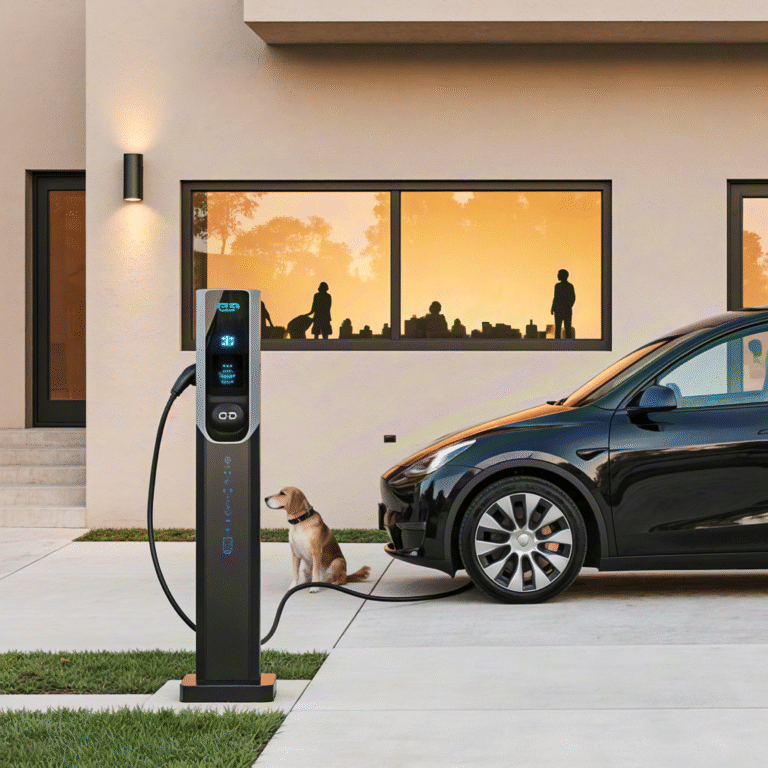
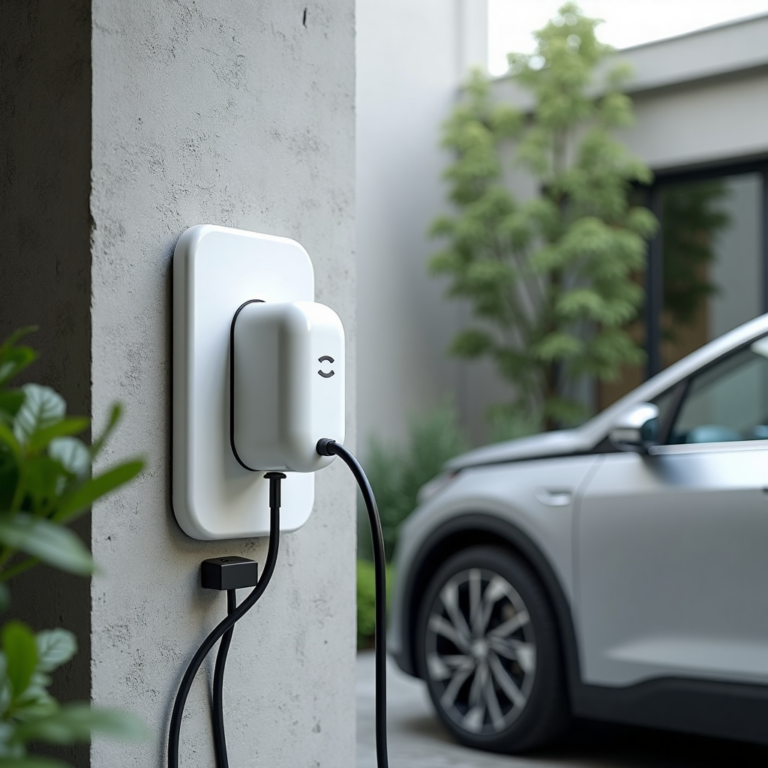
Private EV chargers are the key to the “home use” of new energy vehicles, but the penetration rate will still be less than 40% in 2025. Old residential areas are the main bottleneck: a community built in 2000 has a total of 500 households and is only equipped with a 200kVA transformer. A new energy vehicle slow charging requires 7kW of power. If 30 households charge at the same time, the transformer will be overloaded; the property management company responded negatively due to the “safety responsibility and electricity bill sharing” issues: the person in charge of a community property management company said: “After the EV charger is installed, if a fire occurs, the property management company may be held accountable; and residents require charging at the residential electricity price (0.5 yuan/kWh). The property management company needs to subsidize the difference from the public electricity fee, which is a loss-making business in the long run.” Therefore, although the policy requires the cooperation of the property management company, some communities still refuse to install on the grounds of “insufficient capacitance” and “affecting the appearance”. Car owners can only rely on public EV chargers, which increases the cost and inconvenience of use.
3. Breakthrough Path : Accurate Layout, Technology Upgrade and Model Innovation
In order to make EV chargers truly keep up with the development pace of new energy vehicles, it is necessary to shift from “quantity expansion” to “quality improvement”: optimize the layout through big data, develop high-power fast charging technology, and innovate community charging models to solve the core problems of “unbalanced layout, low efficiency, and difficulty in popularization.”
Accurate layout: Use big data to “calculate” demand and avoid “blind deployment”
Operators need to use big data to analyze user charging behavior: for example, through in-vehicle navigation data, payment records, and APP usage habits, they can identify high-frequency charging areas (such as shopping malls, office buildings, and hospitals) and low-frequency areas (such as remote townships), and give priority to increasing the density of fast EV chargers in high-frequency areas, and pilot “appointment charging” and “shared charging” models in low-frequency areas; local governments can combine urban planning to compulsorily reserve EV chargers in newly built residential and commercial complexes to avoid the “high cost” of later renovation: a certain city stipulates that new residential areas must be designed according to “100% reserved charging conditions for parking spaces”. When renovating old residential areas, the government will subsidize 50% of the capacitor expansion costs. In the first half of 2025, the city’s private EV charger installation rate will increase from 25% to 45%.
Technology upgrade: Promote superEV chargers and shorten “charging time”
High-power fast charging technology is the key to improving efficiency: In 2025, some companies have launched a combination of “800V high-voltage platform + liquid-cooled superEV charger”, with a charging power of up to 600kW. A car with a range of 600 kilometers can be charged to 80% in 10 minutes, which is close to the refueling experience; car companies and operators are jointly promoting the supercharging network: a certain brand announced that it will build 5,000 supercharging stations across the country by 2025. Users can view the available EV chargers in real time through the in-vehicle navigation and make an appointment for charging time to avoid queuing; in addition, wireless charging technology is also being piloted: a wireless charging road laid in a certain park can automatically charge the vehicle when it is driving at a low speed. If combined with autonomous driving in the future, it may achieve a seamless experience of “charging while driving”.
Model innovation: Solve the community charging problem and make “private EV chargers shared”
For old residential communities, the “private EV charger sharing” model can be explored: encourage car owners who have installed private EV chargers to open the EV chargers to other car owners during idle periods (such as during daytime work) and earn profits through time-sharing pricing; operators provide platform support and are responsible for user authentication, payment settlement and dispute mediation: data from a certain platform shows that car owners who participate in sharing earn an average of 300 yuan per month more, and the charging cost for car owners who borrow EV chargers is 20% lower than that for public EV chargers ; the government can also introduce incentive policies: provide electricity subsidies or tax exemptions to car owners who share EV chargers, and reward properties that coordinate sharing to increase the enthusiasm of all parties to participate.
The construction of EV chargers in 2025 is entering the stage of “quality competition” from “scale expansion”. The “surge” in quantity is certainly important, but the rationality of the layout, the advancement of technology, and the innovation of the model are the core factors that determine whether “cars and EV chargers” can develop synchronously. For operators, it is necessary to shift from “land grabbing” to “intensive cultivation” and use big data to optimize the location of each EV charger; for car companies, it is necessary to incorporate charging services into product competitiveness and improve user experience through supercharging technology and reservation platforms; for the government, it is necessary to balance policy enforcement and market rules, use subsidies to guide companies to layout weak areas, and use standards to regulate the healthy development of the industry. Only when policies, enterprises, and society form a joint force can EV chargers be transformed from “sufficient” to “easy to use” and truly support the “green future” of new energy vehicles.
Contact us to explore customized solutions for fleets, real estate, or public projects.